
Lowell Damon House, Wauwatosa’s Oldest Residence, Is Sold
by Dave Vogel
Historic Wauwatosa, Issue 252, Winter 2020
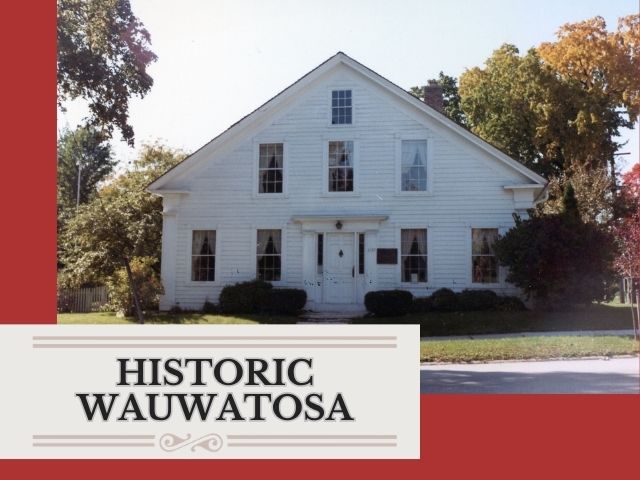
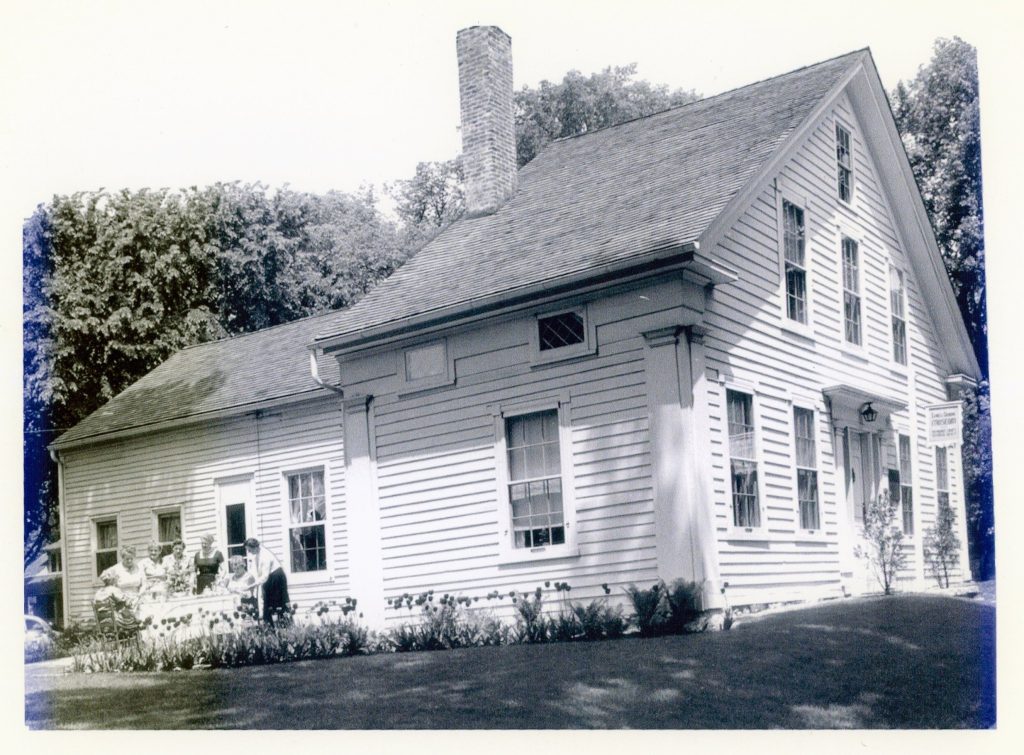
Lowell Damon’s small house on Wauwatosa Avenue was pitifully lonely and ready for the wrecking ball when it was rescued about 75 years ago and turned into a period museum.
Then, as today, motorists driving past scarcely gave a second glance to the Damon House, the oldest building in town. Barely seen and rarely visited, the mostly shuttered relic of a bygone day has been scraping by for decades. Now, its sleepy life as a museum has come to an end.
The Damon House has reverted to private ownership. Its future is undetermined.
William and Jennifer Hoag purchased the house in November 2020 from the Milwaukee County Historical Society. The Hoags, who live nearby on Church Street, said they are conferring with city planners and weighing options for new uses. Whatever the Hoags do will be guided by a permanent preservation easement that requires approval for any alterations to the exterior and significant interior spaces.
Earlier, the Wauwatosa Historical Society, city officials, and a namesake neighborhood association, Lowell Damon Woods, were approached about taking over the property and declined, said Mame Croze McCully, the Milwaukee County Historical Society’s executive director.
“We believe this is the best preservation outcome for the building,” she said. “I’m excited to see what the future holds for this house.”
The county historical society’s board of directors had been mulling the museum’s future for more than five years while continually spending thousands of dollars yearly on maintenance. Croze McCully said that for at least the past 30 years, the museum limped along with just enough money for emergency repairs. Critical maintenance was deferred, which worked against the aims of preservation.
“It’s a sad thing, but it was financially unsustainable, and we just couldn’t keep it up,” she said. “In effect, it was demolition by neglect.”
Alissa Weber, Wauwatosa Historical Society executive director, said she and members of her board inspected the house after Croze McCully approached them last fall. They were overwhelmed by the scale of repairs needed.
“It’s frustrating because we’ve got our hands full with our own education mission as well as costly preservation of our headquarters in the historic Kneeland-Walker House,” Weber said. “But the most important thing is that the Damon House will be preserved.”
Since the house opened as a museum, thousands of school children have toured it on Wednesday field trips. In recent years, the museum hosted only a couple hundred visitors a year, with a mere trickle on Sunday afternoons. Lack of restrooms and safety concerns have proved to be insurmountable obstacles to bringing in more visitors.
Most artifacts in the house, probably 90%, were unrelated to Wauwatosa. They are now stored by the county historical society and are available for special exhibits. The house has architectural features considered uncommon in Wisconsin, but mainly is recognized because it survived long enough to become the oldest building in town.
Lowell Damon built the more elaborate four-room front of the house after moving to Wauwatosa in 1846. His father, Oliver Damon Jr., moved to Wauwatosa two years earlier and built the back of the house. That part has been the caretaker’s living quarters in recent years.
The Damons weren’t big names in local history. Oliver supervised the county poor farm. Lowell was a wheelwright and furniture maker who served as clerk for the old Town of Wauwatosa for 24 years and a county supervisor for a couple of years. Oliver Damon came to Wauwatosa from Fitzwilliam, New Hampshire, in 1844. He used wood from the nearby forest to build the original part of the house.
Lowell Damon died in 1878. His widow, Amy, died in 1931. They are buried at Forest Home Cemetery and have no living descendants.
A 1935 Historic American Buildings Survey by the National Park Service described the construction: “Some of the young saplings were simply squared on one side and used as rafters and joists. Others were hewn and squared with an adze, and the tool marks are still to be seen on many a piece of timber in the old house. Much of this timbering is of oak and black walnut.”
“With Oliver were his son-in-law, Jonathan Warren, and other family. By 1846, Oliver and/or his son Lowell had added the stylish 1.5-story front section. The broad front and one-room depth are unusual for Wisconsin — perhaps a form the Damons knew from New England. The shape of the building could be considered Colonial-style, as could the front door with its symmetry and sidelights. Greek Revival style could provide the pilasters on the front corners, the cornice returns, and the frieze boards. The diamond-paned frieze windows on the side walls are an uncommon touch.”
By 1935, the survey found that the house had fallen into disrepair and had “outlived its usefulness as a human habitation. It is almost ready for the hand of the wrecker.”
Instead, the nostalgic sons of a previous owner, Alexander Rogers, bought their childhood home and donated it to the county historical society for use as a museum. It was the county historical society’s first property. Today, the society operates the Kilbourntown House museum at Estabrook Park in Shorewood, the Jeremiah Curtin Museum and Trimborn Farms, both in Greendale, and the society’s headquarters in an old bank building in downtown Milwaukee.
Over the years, gardens surrounding the Damon House were maintained by local garden clubs. Most of those clubs folded in the 1970s, and volunteers with the Master Gardeners of Southeastern Wisconsin have handled the gardening in recent years.
The Damon House was one of more than 15,000 house museums in the nation, according to the National Trust for Historic Preservation. Many are small and obscure. Many are also struggling to stay open. Wauwatosans who organized in the 1960s and ’70s to raise money for the museum called themselves “Friends of Lowell Damon,” or FOLD. They probably wouldn’t be pleased to see the museum fold, but would at least be satisfied that this piece of Wauwatosa’s past has a future.
You must be logged in to post a comment.