
The House at Underwood Creek
Dictated by Emma Whittier Underwood Gray (1847-1935) to Alice Underwood Nelson, March 2, 1935
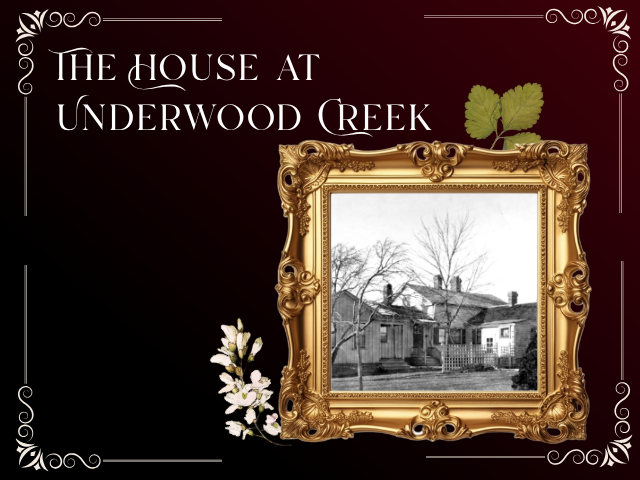
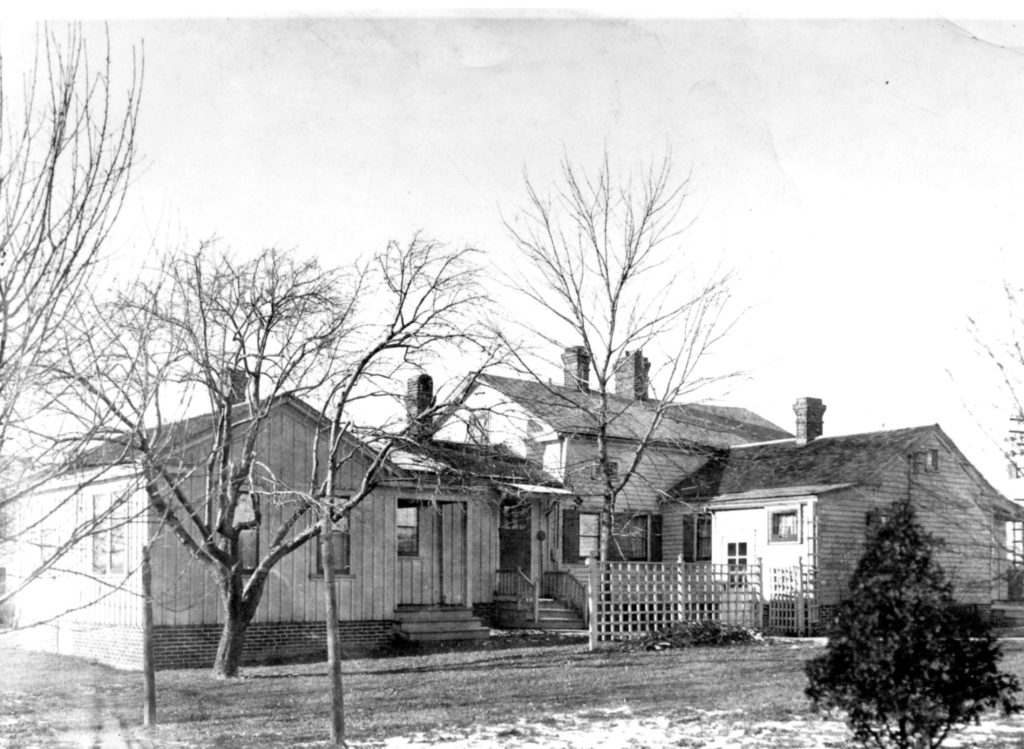
Our houses were heated by the kitchen wood stove largely when cooking was going on, but later by the sheet iron stove in the living room with pipes running to the bedrooms. We could put an extra sheet iron stove in any room in case of illness. We used this until later we got our coal heater. We had no fireplace after the original log house was torn down. Until after Hattie was born. And then we had a living room fireplace, to our great joy. Grandfather William Underwood had a great many fireplaces in his large home.
In winter for food we had fowls, always mutton, pork and sometimes a neighbor killed a beef [sic] and we had a quarter or a half, exchanging when we butchered. As to vegetables, we hadn’t much variety, but we always had potatoes, turnips and onions. People did not eat vegetables so much then. Fred still likes honey on baked potatoes–in those days one got honey from wild bees and must kill the swarm to get the crop. We always had apples, currants, plums and various berries that we picked in the woods.
We wore much warmer clothing then than we do now as the houses were not so warm. There was no knit underwear of either wool or cotton–what we had was red flannel or “linsey-woolsey”–a woolen and linen fabric, very harsh.
All of us had sensitive skins, and so we did not wear this. A great many of the people, ourselves among them, had kin in the East who sent them clothing–wool delaine, cashmere and French flannel.[1] Our shoes were usually bought, not made to measure and were seldom a good fit, and I and my sister suffered all our lives from the effects of wearing ill-fitting shoes.
About the Reminiscences of Wauwatosa’s Underwood Family
Reminiscences of Wauwatosa’s Underwood Family are transcribed from a photocopied handwritten journal in the files of the Judith A. Simonsen Research Library at the Wauwatosa Historical Society.
Footnotes
[1] Wool delaine was a high-quality fabric for women’s dresses, also known as “worsted wool.”
You must be logged in to post a comment.